
The Hierarchy of Controls Explained: From Elimination to PPE
The Hierarchy of Controls Explained: From Elimination to PPE
Ask any occupational health and safety professional what the most important framework in workplace safety is, and a significant number will point to the hierarchy of controls. It is the structured, logical approach to deciding how hazards should be managed and understanding it is essential for anyone responsible for keeping people safe at work.
At Lifeline OSH Consultancy, we use the hierarchy of controls as a cornerstone of every risk assessment and safety management engagement we undertake. In this post, we explain what it is, how each level works, and why so many workplaces are applying it in the wrong order.
What Is the Hierarchy of Controls?
The hierarchy of controls is a ranked system of hazard control measures, ordered from most effective to least effective. It provides a decision-making framework that guides safety professionals and managers toward the most protective solution possible for any given hazard rather than defaulting immediately to the easiest or cheapest option.
The five levels of the hierarchy, from top to bottom, are:
- Elimination
- Substitution
- Engineering Controls
- Administrative Controls
- Personal Protective Equipment (PPE)
The further up the hierarchy a control sits, the more effective it is because it either removes the hazard entirely or places a physical barrier between the hazard and the worker. Controls lower in the hierarchy rely on human behaviour or equipment, both of which are fallible.
Level 1: Elimination
Elimination is the most effective control measure because it removes the hazard completely. If there is no hazard, there is no risk. Full stop.
Examples of elimination include:
- Removing a piece of damaged equipment from service permanently
- Discontinuing a process that uses a hazardous chemical
- Demolishing a structurally unsound building rather than attempting repair
Elimination is not always possible you cannot eliminate the hazard of working at height if the work inherently requires it. But whenever elimination is feasible, it should always be the first option considered, not the last.
Level 2: Substitution
When a hazard cannot be eliminated, the next best approach is to substitute it with something less hazardous. The hazard still exists, but it is replaced with one that presents a lower level of risk.
Examples of substitution include:
- Replacing a highly toxic cleaning solvent with a less harmful alternative
- Substituting manual lifting with mechanical handling equipment
- Using water-based paint instead of solvent-based paint in a confined space
Substitution requires careful evaluation it is important to ensure that the replacement does not introduce a new hazard that is equally or more dangerous than the original.
Level 3: Engineering Controls
Engineering controls involve physically modifying the workplace, equipment, or process to reduce exposure to a hazard. Unlike the first two levels, engineering controls do not remove the hazard they isolate people from it.
Examples include:
- Installing machine guards around rotating parts
- Adding local exhaust ventilation to remove chemical fumes at source
- Building barriers or guardrails around edges at height
- Installing noise enclosures around loud machinery
- Implementing interlocking systems that prevent machines from operating when guards are open
Engineering controls are highly effective because they do not depend on worker behaviour to be effective. Once installed correctly, they work continuously without requiring any action from the people they protect.
Level 4: Administrative Controls
Administrative controls change the way work is organized or performed to reduce exposure to hazards. They do not eliminate or physically contain the hazard they rely on people following procedures, schedules, and rules.
Examples include:
- Job rotation to limit time spent on repetitive tasks
- Permit-to-work systems for high-risk activities
- Safe work procedures and standard operating procedures
- Toolbox talks and safety briefings before high-risk tasks
- Scheduling noisy work during periods when fewer workers are present
Administrative controls are only as effective as the people applying them. They require ongoing training, supervision, and enforcement and they fail the moment someone takes a shortcut or forgets a step.
Level 5: Personal Protective Equipment
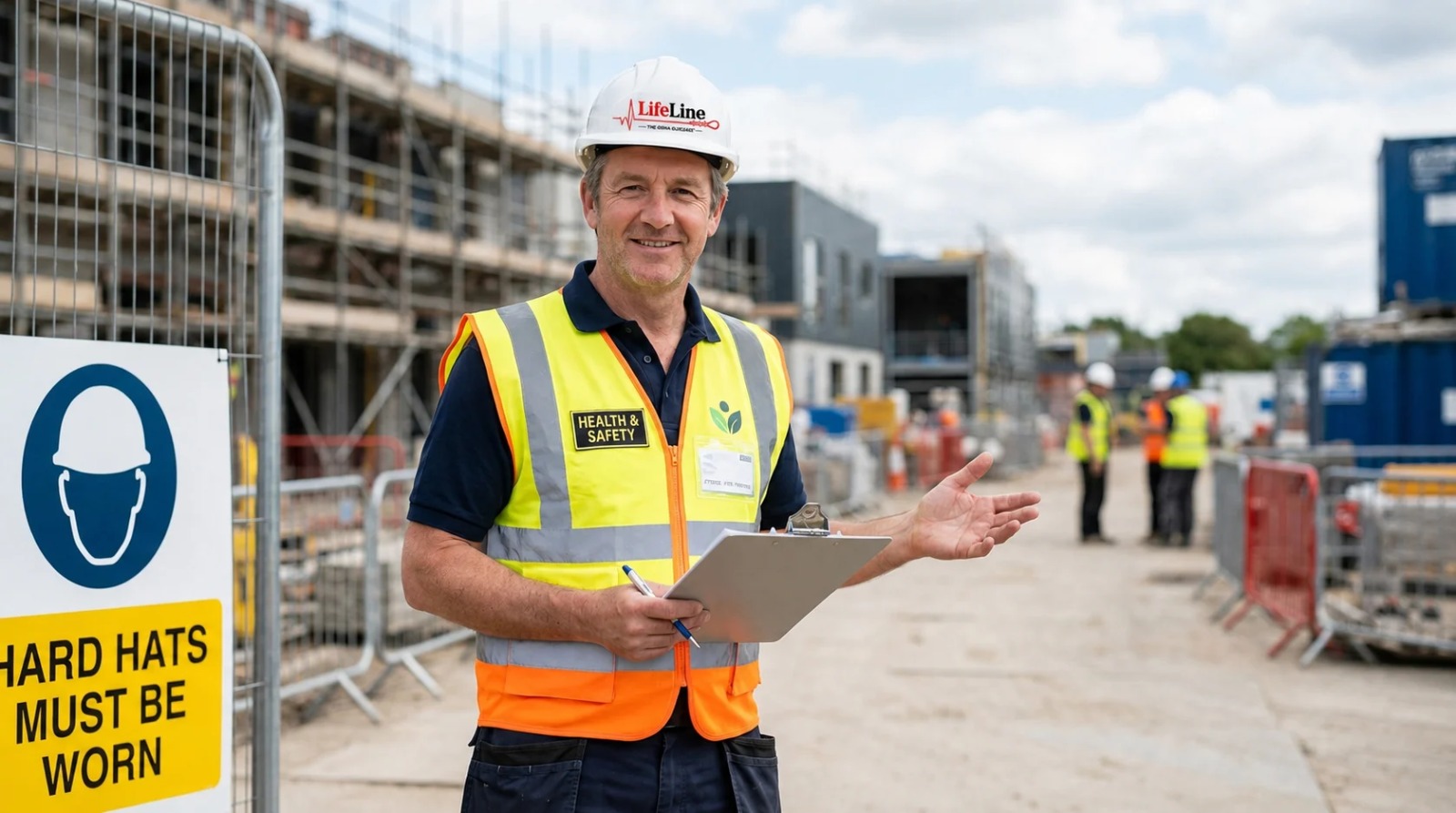
PPE is the final line of defence not the first. It includes all the equipment worn or used by a worker to protect themselves from hazards that have not been fully controlled by the measures above.
Common PPE includes:
- Safety helmets and hard hats
- High-visibility vests
- Safety boots and steel-toed footwear
- Gloves, goggles, and face shields
- Respiratory protective equipment
- Hearing protection
PPE is widely overused as a primary control measure because it is visible, relatively inexpensive, and gives the impression that something is being done. But PPE does not eliminate or reduce the hazard itself it simply reduces the consequences of exposure if everything else fails. If PPE fails, is worn incorrectly, or is not worn at all, the worker is completely unprotected.
Why PPE Should Be the Last Resort
This is one of the most important messages in occupational health and safety: PPE is the last layer of protection, not a substitute for proper hazard control.
Relying on PPE as a primary control measure is dangerous because:
- PPE can fail, degrade, or be damaged without the wearer knowing
- Workers frequently remove or fail to wear PPE correctly, especially in hot climates
- PPE protects only the individual wearing it not others in the environment
- It treats the symptom rather than the cause of the hazard
The most effective safety systems use PPE only after all higher-level controls have been considered and applied where feasible.
Combining Controls for Maximum Protection
In practice, the most effective hazard control strategies combine multiple levels of the hierarchy. For example, managing the risk of a worker being exposed to chemical fumes might involve substituting a less toxic chemical (substitution), installing extraction ventilation (engineering control), limiting exposure time through job rotation (administrative control), and providing respiratory protection (PPE) as a backup.
No single control measure is perfect. Layering them sometimes called the Swiss cheese model means that even if one layer fails, others remain in place.
The Lifeline OSH Approach
At Lifeline OSH Consultancy, every risk assessment we conduct applies the hierarchy of controls systematically, ensuring that clients receive recommendations that go beyond simply issuing workers with safety gloves and calling it done. We look first for opportunities to eliminate or reduce the hazard at source, and work down the hierarchy only where higher-level controls are not reasonably practicable.
Want to know whether your current hazard controls are as effective as they could be? Contact Lifeline OSH Consultancy for a professional review and discover where your safety systems can be strengthened.